
Things are happening in the “multiliner” (felt-tipped pen) world.
This article is NOT sponsored or requested by anyone; I just wrote it to share my recent thoughts on fineliner pens.
For most of my precise ink-and-wash work, I use an IndiGraph India ink fountain pen. For more rough sketching, I have fallen in love with oil-based ballpoint pens for their immediacy and because of how reassuringly hard-wearing they are. But I also have not forgotten about the popular felt-tipped inking pens—I drew my first stores book with these, after all.
Recently, I got back to using this type of pen as a fun tool to brainstorm, even on worse quality paper. But as I try to keep my studio lean and minimalist, I only bought one set of the COPIC Multiliner SPs because this line allows for a more sustainable use with replacement nibs and ink cartridges available.
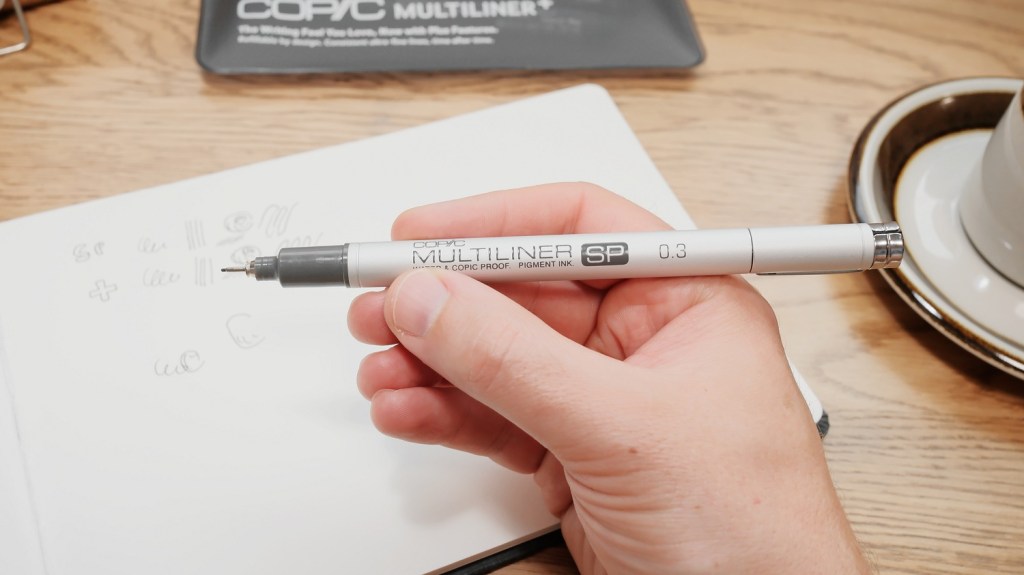
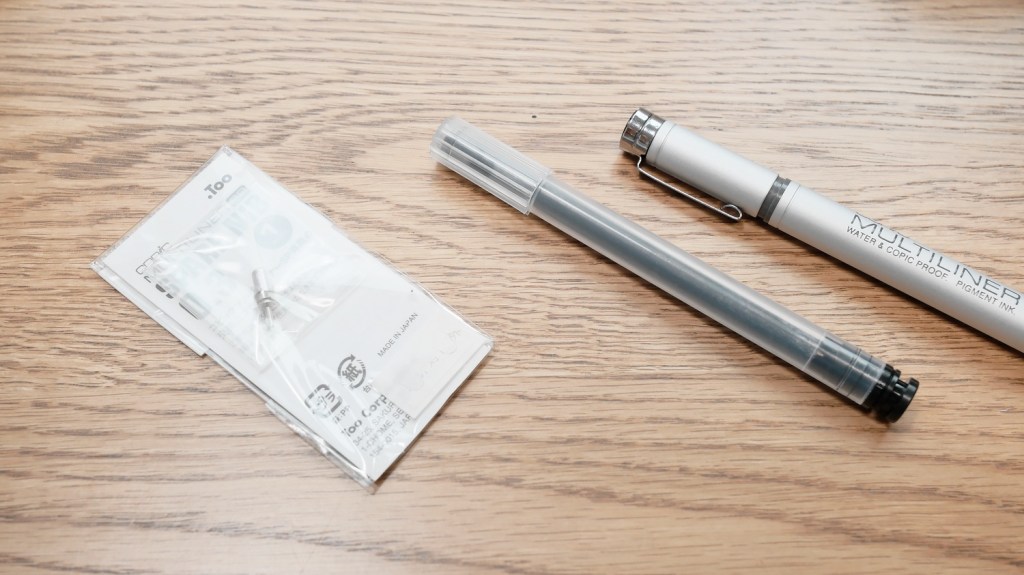
I was therefore quite surprised when I saw that the art store I frequent had the pens and accessories labelled as “end of sale”. I bought what was left of the ink and replacement nibs, and left the store quite disheartened. The nibs of pens like these can wear out quite fast (even after one bigger piece drawn on rough paper) and are easily damaged when pressed on too hard or dropped. As I don’t like disposable art tools, the Multiliner SP was basically the only properly waterproof fineliner pen I knew of, which allowed for sustainable use. Now, with this line discontinued, I sadly had to consider stopping the use of felt-tipped pens in my work altogether.
Well, I’m happier again now because COPIC (or rather the .Too company) released a new line of such pens called the Multiliner+ (let’s call them PLUS) that is based on the same basic principles, with some minor changes and upgrades:
- multiple pen line thicknesses from 0.03mm to 4mm and a brush-like tip
- more ink colors, including two types of gray
- all nib sizes are replaceable, and all ink colors are available as cartridges as well
- better ink, which is now even more water- and alcohol-proof
- sturdier, harder-wearing nibs
On the slightly negative side, though, now the pen bodies are made of plastic similar to the standard (single-use) Multiliners. To be honest, I wasn’t such a big fan of the anodized aluminium of the old SPs in the first place, so for me this is not such a big problem.
Just a small update here: I just realised that a few of the line thicknesses from the old SP series were also axed in the update! Looking at the list in the video below, we can see that the 0.2, 0.25, 0.35, and 0.7mm versions are just gone, and we got 0.8, 1.0, 2.0, and 4.0mm tips instead. This is a huge change, many artists will be dissatisfied with (me included, as I used the .35 the most).
A promotional video was posted by COPIC here.
These new pens go on sale next month, but luckily, Kana attended a stationery event in Tokyo, where COPIC had a booth and was pre-selling the new line, so I now have a small sample to test and compare to the old pens.
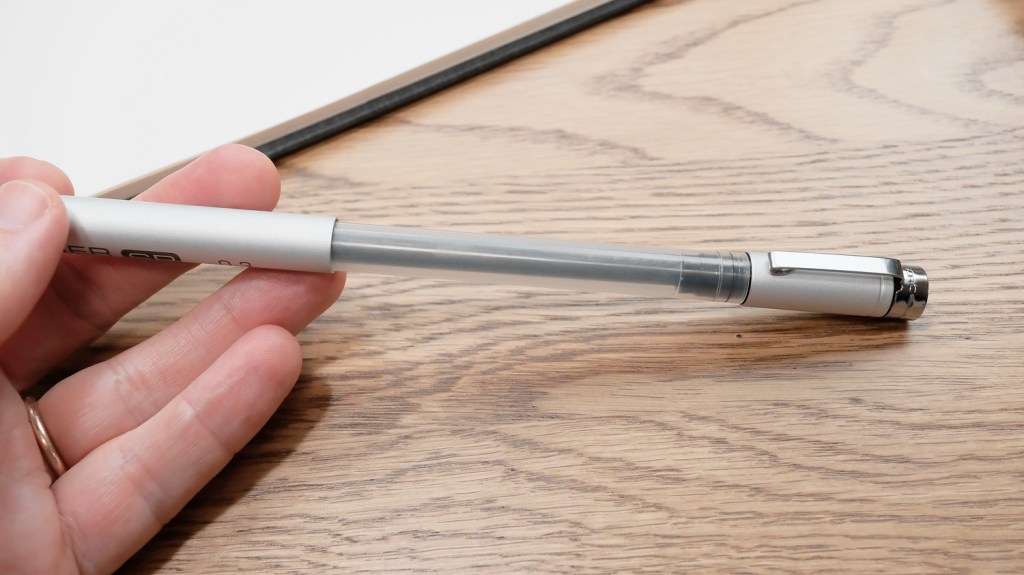
The new plastic bodies are quite nicely finished—matte and without any sharp plastic edges in the grip area. The caps close with a satisfying click, are not too tight, and also post a lot better than in the old SP models (here it was easy to pull out the ink cartridge by accident while pulling on the posted cap).
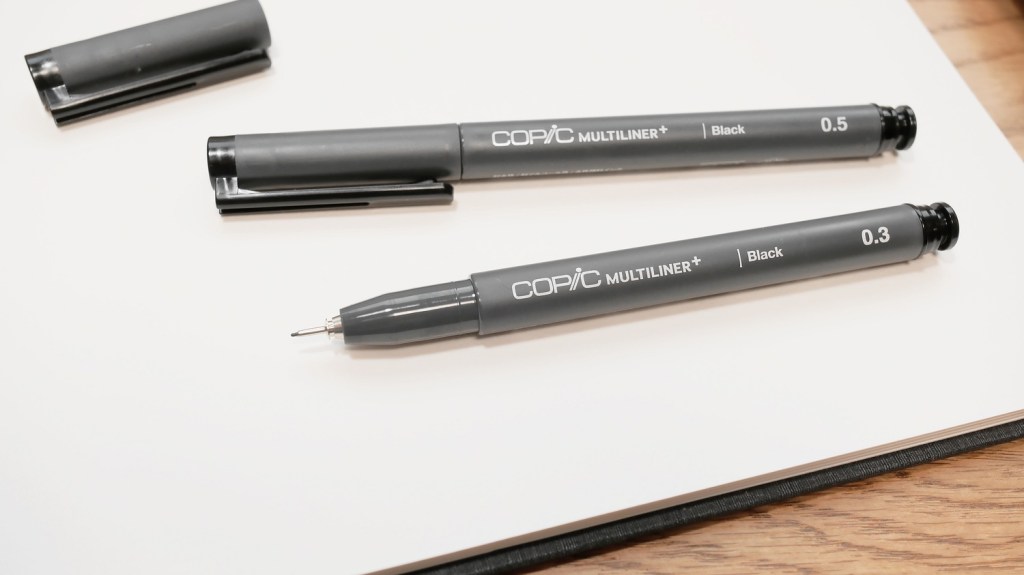
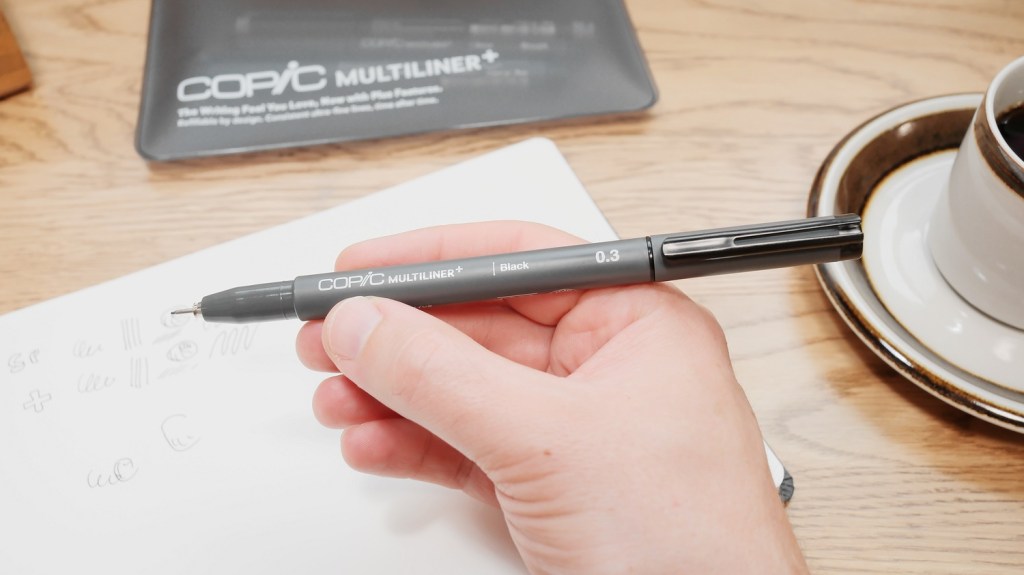
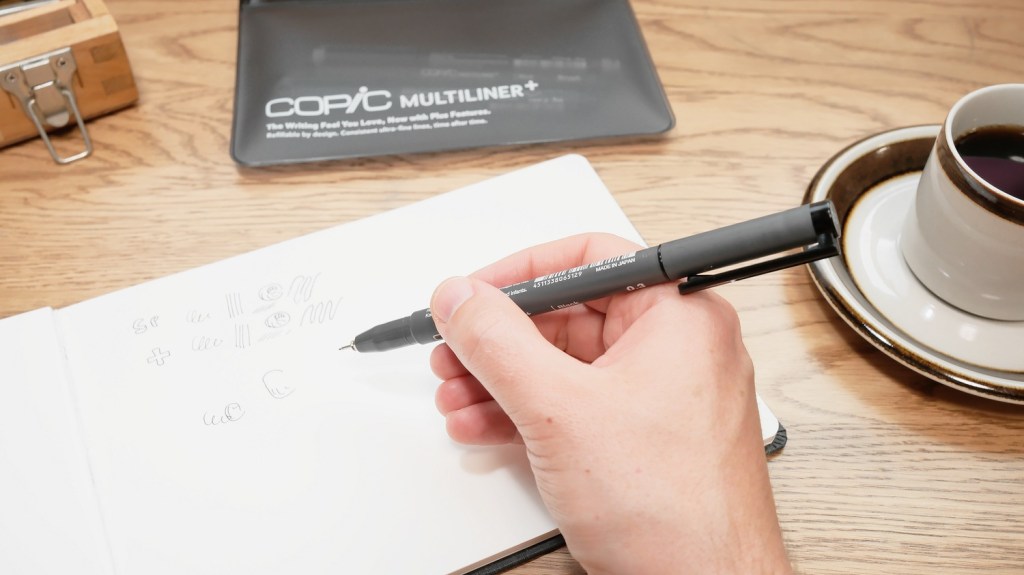
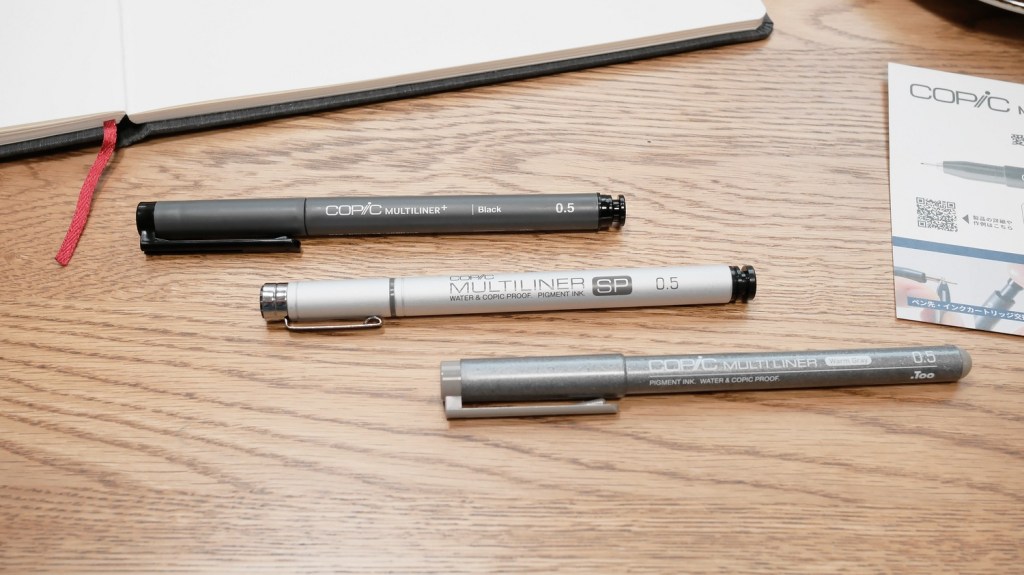
Kana was told by the event staff that the ink formulation has changed to be more waterproof, and this is slightly visible—the new ink seems more cyan-black than the warmer old one, but apart from that, in my tests, it reacted with paper very similarly. As I wrote before, I use the fineliners on the thin and bleed-prone Moleskine paper, but luckily, I saw no difference here either.
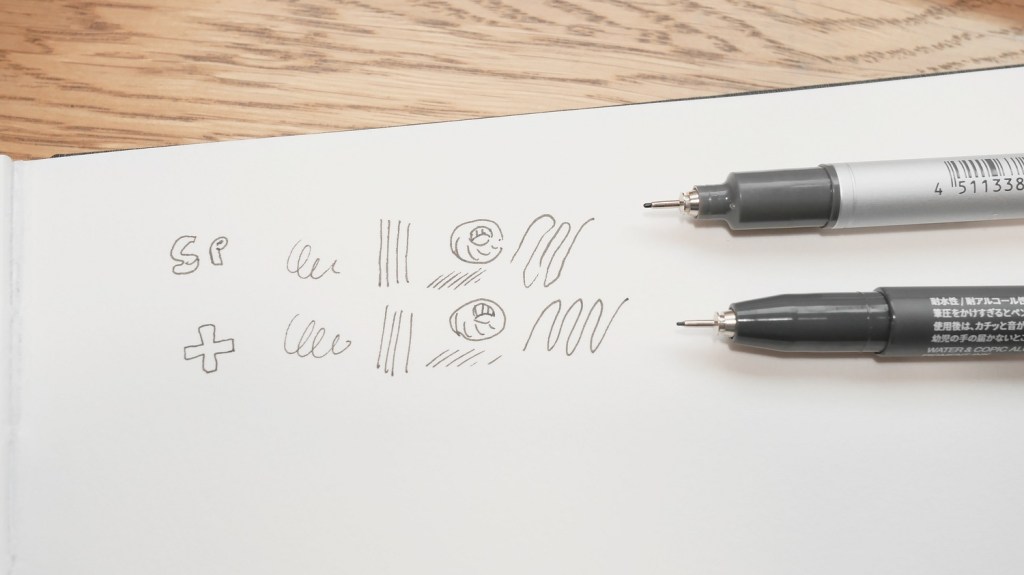
The biggest and most surprising change was the pen tip size—for some thicknesses, the tips got quite thicker or thinner than before. I compared 0.3mm pens: here, although the line width is similar, the new tip is a lot thinner than the old one:
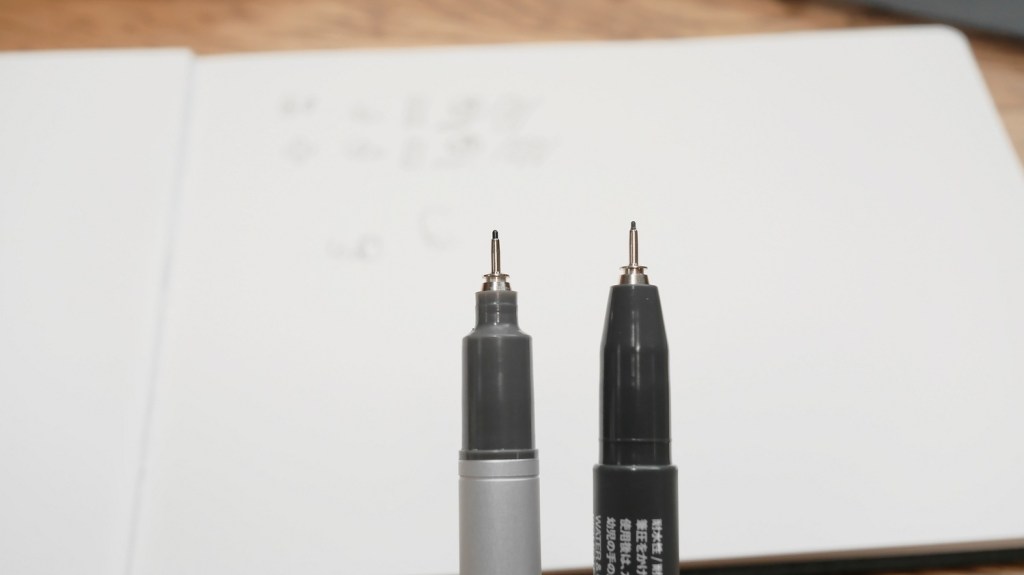
and 0.5mm too: here, on the other hand, the new one was considerably thicker for some reason:
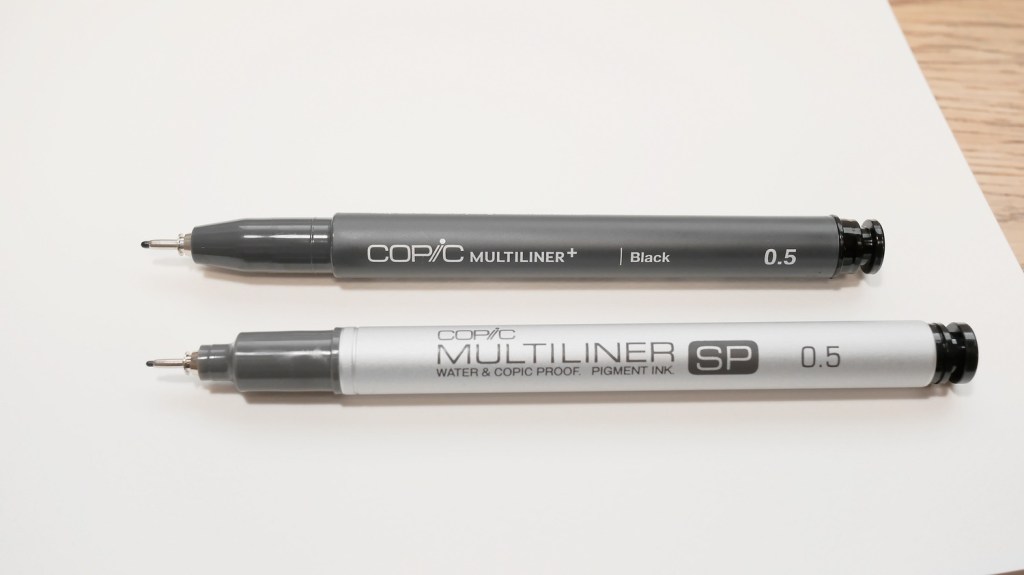
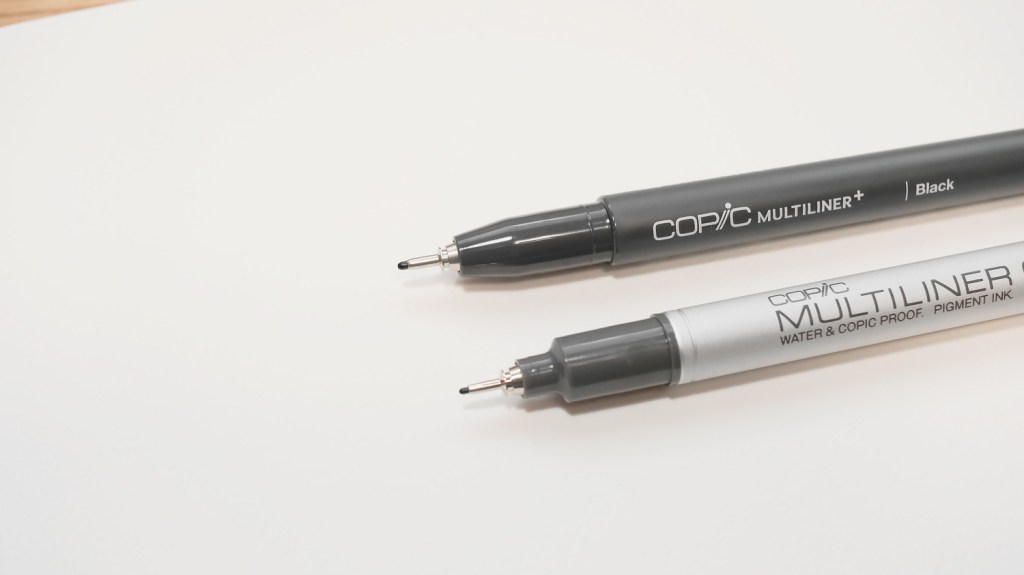
The only explanation I came up with for this difference is a change in viscosity of the new ink. The previous SP Multiliners had two types of replacement black ink cartridges, depending on the line thickness. Now, looking at the COPIC website, there is only one type of black ink refill for the whole line. Maybe this simplification required changes in tips to regulate the ink flow. Well, simpler is better—only one type of black ink replacement cartridge means that having just one in stock is good for all my pens now. Drawing with the new nibs also feels as smooth as usual, it’s really hard to tell them apart in this way.
So, although the replacement nibs look and feel identical, they are not straight drop-in updates. The ink cartridges are also a different shape entirely—in the new Multiliner PLUS, we change only the inner thin tube containing the ink-infused sponge. In the old pens, this was held in a stiff plastic casing. Less single-use plastic, so another upside. Looking at the new maker’s website, the packaging also changed to cardboard boxes. Good.
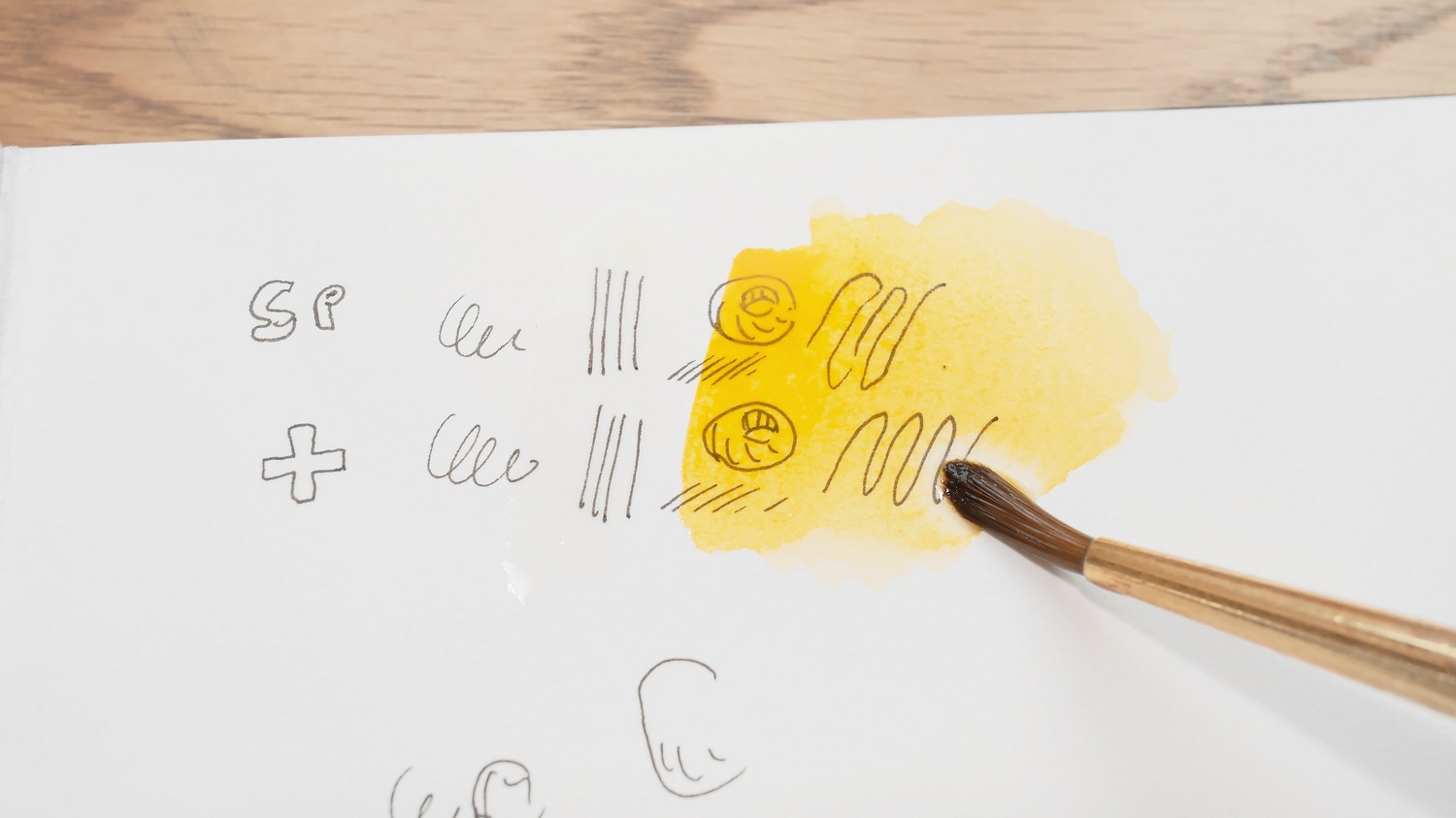
Overall, I’m quite happy about this new re-make of the Multiliner line; we got more colors, nicer pen bodies, more replacable parts with less throw-away plastic, better ink, and less confusing ink cartridges. I’ll still use my old SPs but will switch to these new ones eventually. I must say that the new color options also made me interested now that these too are no longer single-use—maybe sepia or blue lines would work well with my watercolor style?
Are there alternatives?
Not really. There are some small makers like Tom’s Studio that produce “artisan” fineliner pens, but as far as I know the only other mainstream options were Schmidt 6040 fineliner cartridges (which can be used to modify rollerball pens), Kakimori Colour Liner fineliners (sold empty to be filled with fountain pen ink) and the Parker 5th system. The problem with all of these is that the ink is not waterproof and sometimes even highly volatile—on a lot of the pages I wrote with the Parker fineliner, the letters became blurry and bled with age.
Anyway, while researching this short article, I noticed that the Parker websites no longer carry any of the 5th pens. All I could still find were some replacement cartridges, but all the bodies are just gone. Some digging on stationery Reddit and forums confirms that Parker was silently backing out of this line of tools for some time already. It is a bit of a shame because the Parker 5th—as they called their fineliners—was an interesting concept. A felt-tipped pen that behaved and felt in hand more like a high-class fountain pen. The cartridges were also purposefully designed so the tip would wear out unevenly to emulate how fountain pen nibs “get used” to the owner’s style of writing. Cool stuff, but it seems that Parker never got past the downsides, and now they axed the whole idea. I contacted the Japanese Parker support to confirm this, but sadly got no answer—maybe this is a touchy point for the company, they would rather pretend the pen hadn’t existed at all.
So it seems that COPIC is really the only brand I know of making this kind of tool, aimed at professionals who want the option of replacement ink and tips while still having waterproof (and alcohol-proof) ink to use with other media. I’m very glad this option got to live another time, so to speak.


 Mateusz Urbanowicz
Leave a comment