

This article has been brewing in my head for quite a long time. Not only is this an intricate and delicate topic, but it’s also hard to explain to someone not immersed in the Japanese visual scene. I don’t feel like the best person to describe this either. Still, because of my unique position as a foreign artist working in Japan, this is a topic that I’m constantly thinking about and battling professionally. I finally decided to write down some of my thoughts about the moe style of drawing characters, so popular currently in Japan.
Some recent work offers and e-mails that came to my inbox directly prompted me to write down my thoughts. This type of message I’m talking about here is easy to spot. Most of the time, the e-mail will have these words in the first paragraph: “we would like you to paint this in the anime style” or “we want it to be a manga-like drawing.” Because the word “manga” means “comics” and “anime” is just “animation,” these requests mean something similar to “we would like you to write us a novel.” The problem is that when I ask the sender what exactly do they have in mind, and to send me some examples of art in the style they want, what comes back, is usually moe style.
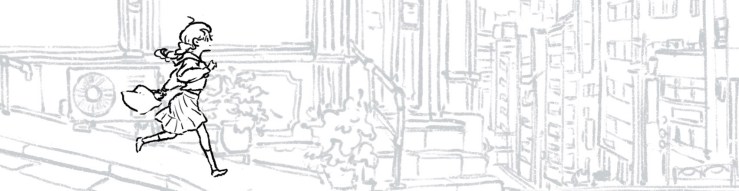
Here is a quick explanation of this term. I know many videos are explaining what is and what isn’t moe, but bear with me. In the Japanese “otaku” — mania culture, this term means to be “excited,” “roused,” “hot for” something. For example, one can be moe about a specific kind of train or feel moe about boys love comics. That’s the word’s original meaning, but I want to talk here about the more common usage of “moe illustration style.“
Some tips on how to recognize the moe style:
- The female characters are portrayed in a style that makes them look a lot more like children or adolescents of “ideal proportions” as imagined by the artist. Usually, this means designs that are really slim, with thin arms and legs, small hands and feet, but bigger heads that make them look childlike. At the same time, they can have disproportionally big breasts and thin waists. The legs are often unrealistically far apart, with a big thigh gap, and bent inwards in the “uchimata” way.
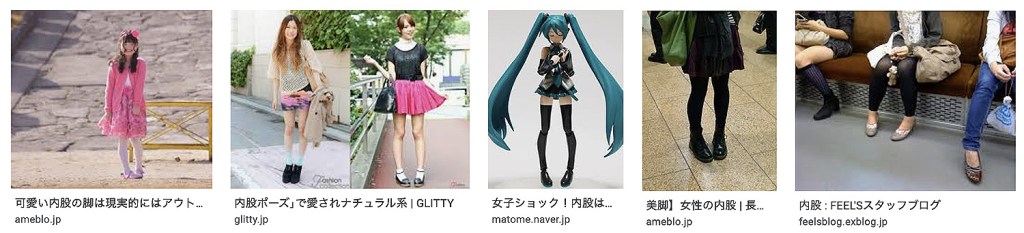
- The clothes the characters wear are drawn in a way that reveals their figure — shirts that cling to the bodyline better than a swimsuit, really short skirts, etc.
- Even if the main protagonist is male, the whole thing revolves around all the female characters. I was told by a university professor researching manga that this is a characteristic inherited after Japanese young adult novels where, in the harem genre, the main male protagonist is just a colorless stand-in for the reader.
- Even if the female characters themselves realize that they are being treated in an erotically charged way, they often let it slide with no or little consequences and are not so much embarrassed about it.
- The female characters are often shown in embarrassing, private situations, in a way that suggests a voyeuristic point of view.
- The female protagonists are often portrayed as unreliable, weak somehow, not good with people, klutz, etc. Often they will have a bandaid or two on to show this. The important thing is that these are not just character traits but convenient “moe cuteness points” to be exploited.
- The moe characters are often stereotypical — a tall “sporty” type or the short, silent “bookish” type or the “class representative” type, and so on, with just small variations.
- Often the female characters are in some artificial way forced to be dependent on the male protagonist.
Ouch! Even writing these examples down was painful. Now that we more-or-less can identify moe style, I want to explain why I’m writing about this in the first place.
Why does the “moe problem” require attention:
Again, there are more comprehensive materials about this, but the problem with moe style art as you might have guessed from reading all the points above is that it depicts female characters as just a cute, often sexual “treat” for the viewer. In my opinion, a lot of art in this style uses fake, eroticized, simplified, objectified images of women aiming mostly for financial gain, popularity, and self-indulgence. I’m not talking here only about the representation of women in fiction. The popularization of such images and how they are overlapping in the common consciousness with real girls and women, negatively influences how women are viewed and treated in Japanese society.
The moe image does not stay in the picture;
it spills into everyday life.
Of course, one could argue that the moe style is a reflection of the inequalities between men and women that have been going on in Japan for decades and are still firmly present today. In many cases, it is still the default role of women and girls to be the “pleaser” and men to be on the receiving end. I’m not a sociologist and can only speak based on what I observed living in Japan for more than ten years, but it seems that these socials standards create a very dangerous, feedback loop with the visual industry. The moe style seems to be getting further and further away from reality but at the same time is getting accepted in more and more places.
The moe style became one of the standard ways of portraying female characters in many visual industry areas, especially in animated series and illustrations. It also broke out of the “mania” circle into the everyday public space. In a way, because the moe style was used so much by just regular companies, advertising agencies, publishing houses, and even government bodies, the society got used to it and mostly accepted it.
Real life examples:
Look at the Draw With Wacom playlist of the tablet maker inviting Japanese illustrators to show their skills and try to count the videos that don’t contain a cutesy female character:
https://www.youtube.com/playlist?list=PL932AB0958975441F

Or check the lineup of this year’s television animated series:
https://www.livechart.me/summer-2020/tv
I would not recommend looking at the “popular” section of the Japanese illustration website PIXIV, either.
This drawing style became so omnipresent in public that even regular commercials and companies like, for example, train lines use slightly sexy moe images for their mascot characters.
https://tetsudou-musume.net/contents/chara/
This style’s omnipresence problem is similar to the one with questionable female images being popularly used in computer games but on a much larger scale. Imagine having the “sexy elf armor warrior” female characters used everywhere.
It’s enough to say that it’s hard for me to find any animation to watch with a clear conscience recently — even if the story is good, the moe style is so overwhelming that it spoils the whole thing. Finding something I would feel good to take part in making as a professional artist remains an even harder task. One of the things that pushed me over the edge and out of the animation industry was the ever-present moe style characters.
One of the things that pushed me over the edge and out of the animation industry was the ever-present moe style characters.
Here, an episode stands out in my memory. It happened when I was working on a short animation, and the time came to design the look of the main female character. A staff member asked me openly, and without any evident embarrassment: “OK, so what’s your fetish?.” I was so stunned that I just stood there silent, so he just went on “you know, glasses or dropping eye shape, or maybe sexy stockings?.” I just ignored his question at that time, but I cannot forget this exchange even now.
When I look at a new animated series being announced, I cannot forget that the main decision process behind making the female characters probably was just a few guys thinking which “fetish” should they use this time. It makes me feel sick and sad.
Why did it come to this?
I can only speculate why the visual industry in Japan got warped like this.
One reason I can think of is this “reference effect.” A creator that was raised watching animations with big robots in them, after joining an animation studio, will feel OK with animating big, cool robots.
And if the animations he saw as a teenager had cutesy, two-dimensional, moe characters, creating similar characters will seem like a good way to go too.
What’s more, they will be using past works as references, often without looking at reality at all. And so they become so used to this “moe standard” female image, they will treat it as the normal, base not to be examined or questioned.
The other point that Kana (my wife, who is also an artist and Japanese) often mentions is this tendency of taking things too far, of trying to push the line of what is acceptable. I have seen this myself too, remember the “fetish” question?
The atmosphere inside the visual industry itself is also peculiar and distorted. It allows this kind of “excited teenager” like behavior for profit. Even if someone in the staff feels that making this character or this scene is morally dubious and is harmful to the female image, they keep their mouths shut before the director or character designer.
Is there anything I can do?
I’m writing this article, not only to raise the awareness of this situation we are facing in Japan, where the visual market is split between the work that utilizes the moe style and “everything else.”

I also want to point out that there is still a lot of good stuff being made to choose from. A lot of comics and illustrations are made that do not use the moe image for their female characters but strive for something better.
This is, in part, possible because a single artist can create these works without relying on what the whole industry wants, and they can aim their works at smaller target groups that will appreciate them and support them. Sometimes a comic like this gets noticed by the wider public too. Recently the “Metamorphose no Engawa.” is a great example of this.
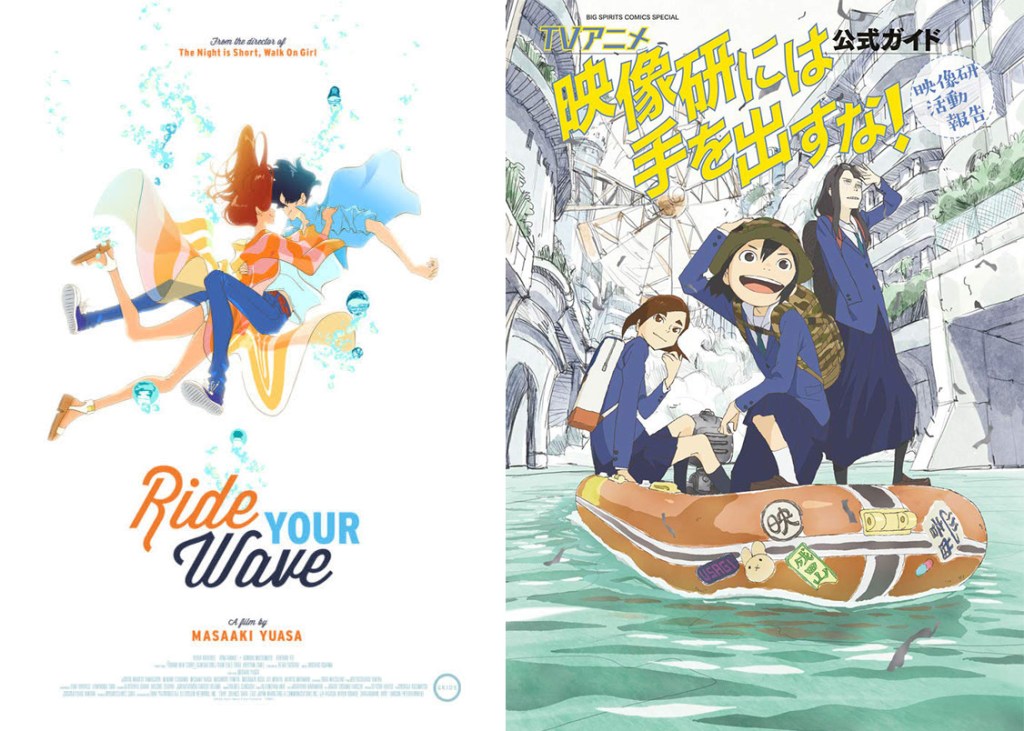
Looking through the list of animations released in the recent few years, it’s harder to find something with female protagonists that do not follow the moe standards. Still, some directors stand out — Masaaki Yuasa’s cinema movie “Ride Your Wave” and TV series “Keep Your Hands Off Eizouken!” are good examples.
I want you to be aware of this and take action, remember to try to choose art that is not moe, ask for more non-moe art, ask for more thought, variety, and true to life female characters with depth.
If you feel brave — question. Ask the creators what exactly did they aim for when making this female character that feels morally dubious, harmful, or just plain insulting to you. Finally, educate your peers on this topic.
In many creative fields across the whole world, the standards are changing to better as we speak. I would also like to see this kind of change in Japan.


 I worked in Japan for a while myself and this was pretty hard to deal with on the day to day – hypersexualisation of everything about young women in that country, perpetuated and normalised by the images presented in Anime was pretty unsettling as colleagues at work openly talked about their favourite moe characters and had no notion of any of these lines of thinking being wrong.


 Mateusz Urbanowicz
Leave a reply to Tom Cancel reply